
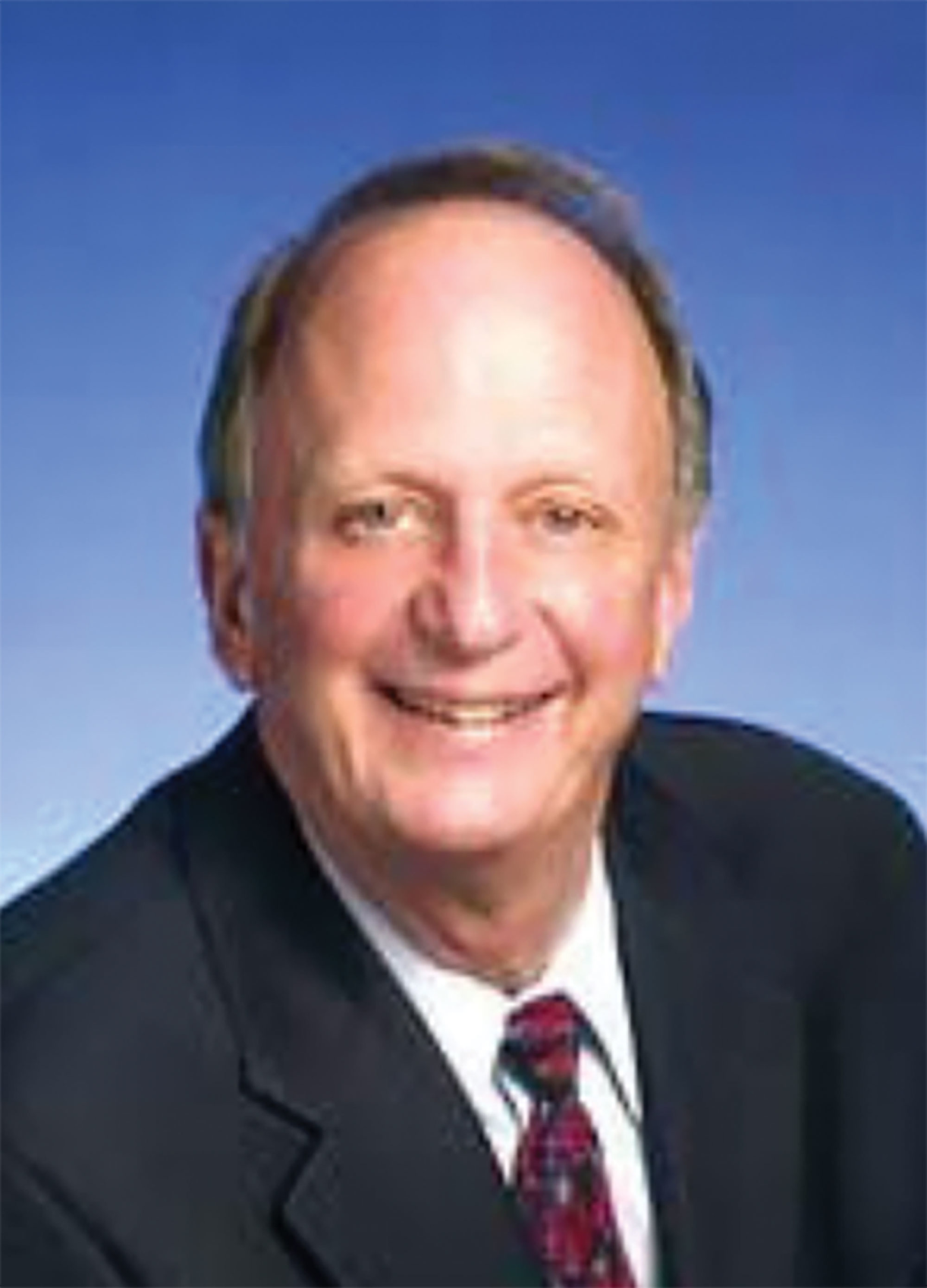



Bill Hobbs
Bill Hobbs
Provocateur, newspaperman, political operative
Bill Hobbs could have stayed in newspapers.
A gifted journalist on the business desk at The Tennessean, Hobbs had an obvious gift for the written word. He knew the power words have — the power to change minds, the power to provoke, the power to anger, the power to garner attention. He knew how the right word in the right place in a sentence could poke and annoy like a finger in the side, and how it could shock and stun like a cattle prod.
Hobbs rose to prominence in conservative circles during the protests against Republican Gov. Don Sundquist’s income tax proposal and became a must-read conservative blogger when must-read blogs were still a thing. Eventually — after he was forced out of a gig at Belmont University because he posted a caricature of the Prophet Muhammad on his blog — he became the Tennessee Republican Party’s communications director.
During the 2008 presidential race, Hobbs — and the TNGOP, then led by his running buddy Robin Smith — was rebuked not just by Democrats, but by top elected Republicans, for attacks on then-candidate Barack Obama. Press releases always and pointedly used his middle name Hussein. Hobbs suggested Obama had the support of anti-Semites and wrongly said the future president was wearing “Muslim garb” on a trip to Kenya. A YouTube video prepared by Hobbs questioned Michelle Obama’s love of her country. Barack Obama said: “Whoever is in charge of the Tennessee GOP needs to think long and hard about the kind of campaign they run. These folks should lay off my wife.” Sen. John McCain joined his opponent in calling out the video.
Hobbs was let go by Smith’s successor, Chris Devaney.
Hobbs could be nasty and mean; very few people would dispute this.
But something changed in him after he left politics. He receded from the public eye for the most part, turning his focus, if you’ll forgive the pun, to photography, for which he had a natural gift. He learned to love ice hockey — he could be seen on Bridgestone Arena’s concourse fairly regularly, his camera slung over his shoulder. He took lengthy road trips, photographing America’s natural wonders and national parks.
The social media warriors and agents provocateurs that are now de rigueur owe a debt, in a way, to Hobbs, who learned early the power of acerbic observations in 140 characters or fewer. But as those types rose to prominence, Hobbs’ feed changed from pugnacious to poignant. Instead of intentionally shocking barbs, there were breathtakingly beautiful photographs.
There was charm and peacefulness in Hobbs — who died in March at 54 — late in his life that was a sharp contrast to the smarm and vitriol that made him infamous. And maybe that man was there all along. —J.R. Lind
Ben West Jr.
Nashville state representative, son of Mayor Ben West
State Rep. Ben West Jr. passed away earlier this year, leaving a legacy of 26 years of public service in the state legislature. Ben’s mark is all over the Donelson, Hermitage and Old Hickory area in east Davidson County. He had a wit, a Southern drawl and charm that made his brand of politics quite unique in Tennessee.
While Ben — son of late Nashville Mayor Ben West — had a reputation of hazing freshman lawmakers on the House floor, he also had a reputation of helping young people in politics. People like myself. I once was frustrated over a piece of legislation, and he gave me some solid advice: “Don’t marry any of your bills, don’t even date them.” It’s advice I give new lawmakers to this day.
Ben participated in and supported countless established nonprofits, chambers of commerce and small businesses, as well as the sports complex, home of the Donelson Hermitage Warriors, that bears his name today. There was a joke that if someone was opening so much as an envelope, Ben was there.
A life of politics, especially one as long as Ben’s, is a challenge when balancing work, family and public service. Ben made it look easy. Gone but not forgotten. Motion to adjourn, sine die. —State Rep. Darren Jernigan
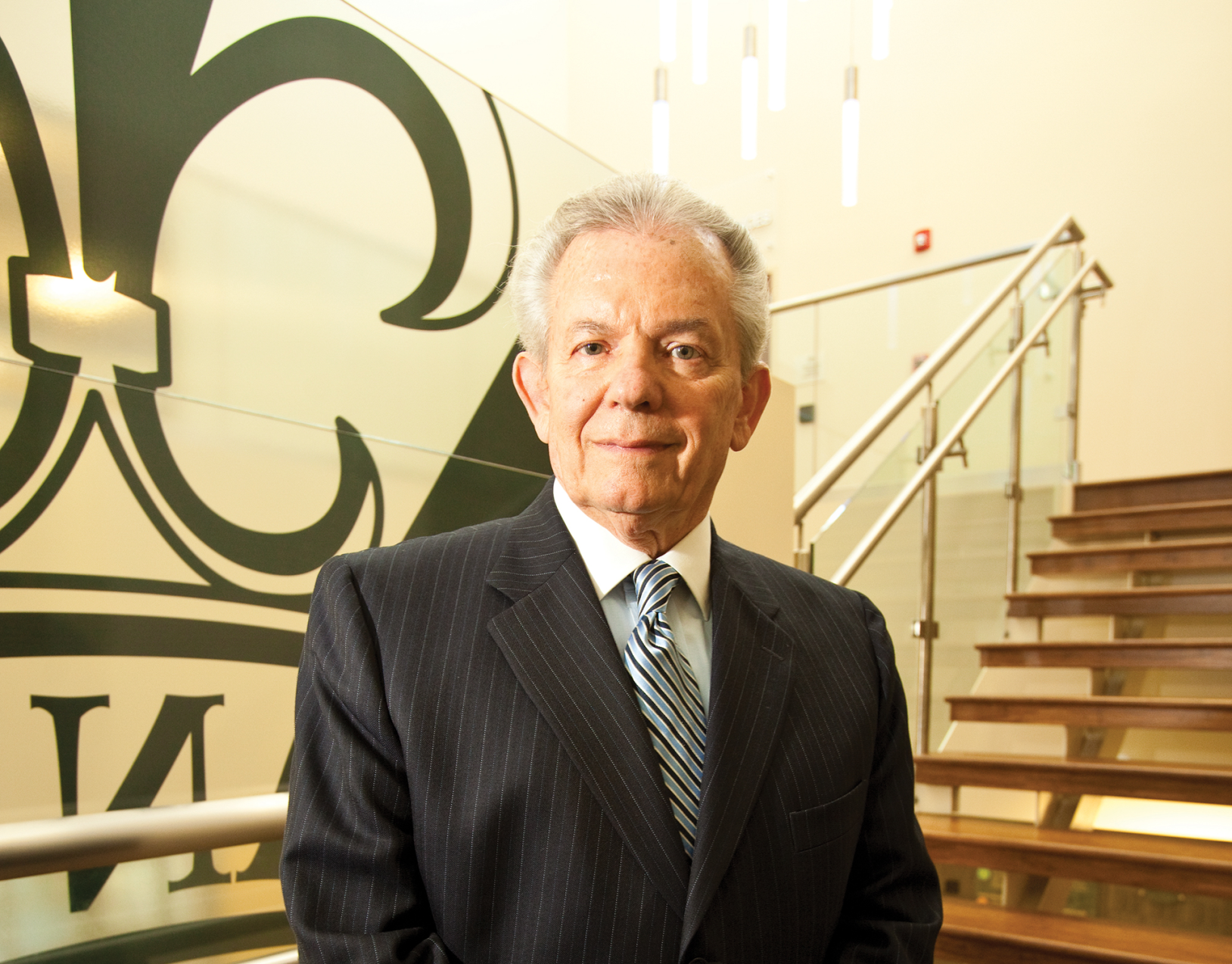
Charlie Cardwell
Charlie Cardwell
Longtime Davidson County trustee
Charlie Cardwell was just 5-foot-6, but he was a giant in Nashville government. Indeed, it was his height as much as anything that played a key role in the career of public service that spanned 60 years, until his death May 13 at age 83 from complications after a heart attack.
Cardwell died with the record of being far-and-away the longest-serving Metro employee, and the county’s longest-serving elected official, having first been appointed as trustee in 1993.
But had Cardwell been just a smidgen taller, he might have ended up as, say, chief of police. After he was discharged from the Navy, he came back home to Nashville, where he’d been raised. He’d intended to join the police department, following in the footsteps of his delightfully nicknamed father, Snooks Cardwell. At the time, the Nashville Police Department required recruits to stand 5-foot-8.
Now, Snooks knew people, as Charlie Cardwell told the Scene’s now-defunct sister publication The City Paper in 2011. And others in the family did, too. It wouldn’t have been so hard to pull some strings and get a waiver so he could join the force, but Cardwell refused and looked for another gig. This story was recalled at memorial services and gatherings of old-timers as evidence of the man’s integrity, and certainly one would be hard-pressed to find anyone who would besmirch Cardwell in death, just as it was difficult to do so during his life. And it’s a charming story, to be sure. But there’s another side of it.
Cardwell, after all, still went to work for the city, starting as a clerk in the city finance office at $325 per month (equal to about $2,900 in 2019). As he told The City Paper, he got that job because his daddy knew Mayor Ben West, then in the seventh of his eventual 12 years leading the city. And with that foot in the door, Cardwell climbed the ranks, working up to finance director for the consolidated Metro government, deputy mayor and state revenue commissioner. He was a career public servant — but one with the political chops to win numerous elections in his own right, as well as to manage the successful congressional run of Bob Clement, another scion of a Nashville political family.
Nashville is a different city than it was when the diminutive Cardwell slipped into a city job. For decades, Nashville’s political leaders and their functionaries were born and bred in Nashville — cultivated, educated (formally and otherwise) and elevated within its various bureaus and departments. It wasn’t a machine in the purest or most profane sense of the term. The machine of Nashville proper more or less died with Hilary Howse and the city’s repeal of the poll tax; Davidson County’s machine of Hopewell Box fame puttered along until the city and county consolidated as Metro government in 1963. What got Cardwell — and many others — that first job wasn’t Tammany Y’all, as we’ll call it. But who you knew, who your daddy knew and who you’d helped was certainly a pathway to patronage in days of yore. Through a 2019 lens, such a non-meritocratic system seems unfair at best, and perhaps even criminal at worst. But there’s a certain pragmatism to it, and in the long run, there were certain benefits: a cadre of public employees who were invested in the government, knowing that a job well done could accrue long-term stability for an entire family for generations.
By default, Cardwell became Metro’s elder statesman, called on for advice not just about the city’s finances, his knowledge of which was unparalleled, but about other challenges the city faced. By the end of his long life, there wasn’t much he hadn’t seen, after all, and few solutions he hadn’t considered (or seen others consider). Institutional memory like Cardwell’s can’t just be replaced with open-data portals and other 21st-century jargon. Numbers are cold and don’t have imaginations or emotions. Whiz-kid analysts can benefit city services, but these days it’s increasingly less likely they’ll still be serving the public when their youthful wizardry ripens into the wisdom of age.
Remember Cardwell as a gentleman and a public servant who gave his working years to the city. And remember a bygone era that died with him: an era that had anachronistically distasteful elements, but also created a culture of knowledge and duty that’s withering away. —J.R. Lind

David Manning
David Manning
Metro finance director
In a democracy, finance is the hardest of all the jobs — it’s both science and art, dollars and people, saying no … so you can say yes. Saying yes to health care and children, public safety and prisoners, sidewalks and schoolrooms, parks and playgrounds, pensioners and every possible good and right thing. Because David Manning was so wonderfully good at it, he made it possible to change our world in these and a thousand other ways.
David’s insight, imagination, integrity and empathy were extraordinary. He was simply and objectively the best, and will remain the model for Nashville and Tennessee and everywhere else. He never asked for thanks, and received much less than he deserved. He bore the slings and arrows of people who didn’t understand, or didn’t want to, and he never ever complained or responded in kind. He just went to work — for us all.
The Book of Romans explains that public servants are but God’s servants for the protection of the people. David Manning understood those words in a deep and personal way, and he lived those words every minute of every day. And that made all the difference — for us all. —Former Mayor Bill Purcell
Ronald Schlicher
Attorney, diplomat
Ronald Schlicher had a skill many long for but few possess: His brain was a sponge for new languages.
It wasn’t a gift that was particularly useful as an attorney. But a few years as a lawyer had him looking for something different, so Schlicher decided to begin the notoriously difficult process of becoming a foreign service officer for the U.S. Department of State. And the way his special mind soaked up languages caught the notice of his future employers — so Schlicher left law and became a diplomat.
We’ve learned a lot about career diplomats in the current political climate. We’ve learned how they are loath to draw attention to themselves, how malleable they must be to navigate foreign cultures and mores and, if they stick around long enough, the changing foreign policy perspectives of the White House’s occupants.
And we’ve learned that the esteem in which these anonymous faces of our country are held can be divined by the difficulty of the postings they receive. If that’s a good rule of thumb, Schlichler was one of the best, as his résumé is full of countries war-torn or otherwise imperiled. He had a particular gift for the Arabic language — he learned numerous dialects and was skilled enough to even do impressions in the foreign tongue, including what was, apparently, a dead-ringer for Palestinian leader Yasser Arafat.
But a gift for Arabic meant postings that weren’t cakewalks: Egypt, Syria and Oman, the job of chief of mission in Jerusalem. In that particular role, he served during the Second Intifada and worked as a mediator between Israel and the Palestinians. He served as ambassador to Cyprus and then directed the State Department’s Iraq Task Force when the war there began in 2003. Eventually, he joined the Coalition Provisional Authority, where — unarmed and wearing Kevlar — he traveled from Baghdad to Fallujah in a last-ditch effort to ease tension in that ravaged city.
Schlicher, who retired in 2011 after nearly 30 years, died in September. He was 63. —J.R. Lind
John Trice Nixon
Jurist
Though John Trice Nixon was born in New Orleans, it was perhaps inevitable that he would end up in Nashville. His father, Herman Clarence Nixon, was teaching at Tulane University when his son was born in 1933, but he was tied to Vanderbilt as a member of the Southern Agrarians, a group of political scientists and writers whose legacy is undeniable, if mixed, in modern times.
After Harvard, Nixon did indeed end up in Nashville, graduating from Vanderbilt’s School of Law in 1960 after a stint in the Army. He left Nashville after law school, working in Anniston, Ala., eventually becoming a trial attorney with the Civil Rights Division of the U.S. Department of Justice. He worked as an attorney for Tennessee’s comptroller and then went back into private practice in Nashville in 1977, before terms as a circuit court and general sessions judge.
In 1980, Congress added another judge to the Middle District of Tennessee, and President Jimmy Carter nominated Nixon, who took the bench in May of that year. He served 18 years — the last seven as senior judge for the district — before taking senior status in 1998. He then served another 18 years on active senior status, from 1998 until 2016.
Nixon was married to former Nashville Councilmember Betty Nixon. The couple divorced. Nixon died Dec. 19 in his Los Angeles apartment. He was 86. —J.R. Lind



