

The Belcourt will close out its "Visions of the South" series this week with four unique films that feature a veritable prism of African-American perspectives throughout the past 100 years. That seems fitting. More to the point: It seems fair, as people who have dealt with many trials and tribulations in this part of the country, that black folk get the last word.
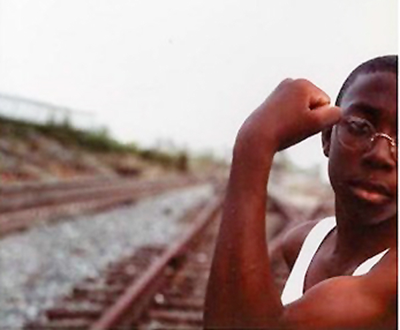
Let's start with David Gordon Green's awe-inspiring debut George Washington (April 2-3). It was released in 2000, practically making it a film that would welcome a more ideal, post-millennial view of the South. This movie has poor, mature-for-their-age black kids and their white buddies aimlessly wandering through a crumbling working-class North Carolina town. A wildly unpredictable talent — he would go on to flip his own script and direct the stoner comedies Pineapple Express and next week's Your Highness — Green owes a lot to filmmakers Terrence Malick and Charles Burnett for his debut feature, a striking, lyrical, immensely artful portrait of Southern lower-class living. In his own hopeful vision of the South, impoverished blacks and whites associate with each other mainly because they have the same desire: the urge to do something more with their lives.
Now let's take it way back to 1964. That's when the black-and-white feature Nothing But a Man (April 3 & 5) was released, and soon vanished almost without a trace. Directed by the German-born Michael Roemer, the bluntly naturalistic movie captures the pain and frustration African-Americans felt growing up in the South during the civil rights era. Ivan Dixon (better known as the token black guy on Hogan's Heroes, and later to become an underrated director) stars as a railroad worker trying to maintain his dignity and pride in a rural Mississippi town. His refusal to kowtow to the white man turns him into a pariah in both white and black communities, while causing tension in his new marriage to a schoolteacher (jazz vocalist Abbey Lincoln). The film also includes great early performances from veteran actors Julius Harris, Gloria Foster (who would become the Oracle in the Matrix movies) and a young Yaphet Kotto, few of whom would get dramatic film roles this meaty during the coming blaxploitation era.
Speaking of which, a forgotten film that will turn heads is the long-lost Depression-era period piece Book of Numbers (April 1 & 4) — a Belcourt find that ranks up there with the psychedelic cult sensation House. Released in 1973 and based on a novel by African-American writer Robert Deane Pharr, Numbers is an indie film produced, directed and financed by actor Raymond St. Jacques, who also plays the protagonist, suave old-school hustler Blueboy Harris. He and his buddy Dave (a pre-Miami Vice Philip Michael Thomas) head to El Dorado, Arkansas to open up a numbers bank in the black neighborhood. As their racket prospers, making them big-time, well-respected numbers runners, they eventually have to go toe-to-toe with their "peckerwood" rivals.
Folksy, high-spirited and genuinely sincere, Book of Numbers is one of the rare blaxploitation movies that respected itself too much to be all garish and outrageous. In perhaps the most amazing sequence, Blueboy and his crew put on a courtroom minstrel show in order to beat a rap — something that pisses off prideful Dave to no end. As if he were the director explaining why he took demeaning roles as an actor — so one day he could find the freedom to make this movie — Blueboy soberly reasons why he had to perpetuate a stereotype in order to stay free and keep the good fight going for future generations. He's teaching Dave how to play a crooked game with rigged rules, and it isn't the numbers.
On one level, it's a revelatory moment that shows how black people survived in the early 20th century South. But as the seasoned St. Jacques schools the wet-behind-the-ears Thomas in this scene, it shows how black actors and filmmakers got along in early 20th century Hollywood. How this movie has been overlooked in the annals of black cinema is beyond me.
Closing out the program is a one-night-only screening of the 1925 silent film Body and Soul. Written, produced and directed by trailblazing African-American filmmaker Oscar Micheaux, Soul is one of the more prominent "race movies" that appeared in the early 20th century. This is mostly due to the dual performance of actor/renaissance man Paul Robeson, who literally plays both good and evil as an escaped convict posing as a boozing, Georgia preacher and his estranged, kindhearted twin brother. Until it gets soured by its cop-out, gotcha ending, Soul is a scrappy melodrama where Micheaux examines religious corruption and the stranglehold so-called men of God can have on black communities.
By having this quartet of distinctive, enlightening films play in the final days and nights of this memorable program, the Belcourt's "Visions of the South" series has proven itself to be a fully rounded overview. Its programmers can say they've shown the South from every angle — and through many eyes.



